
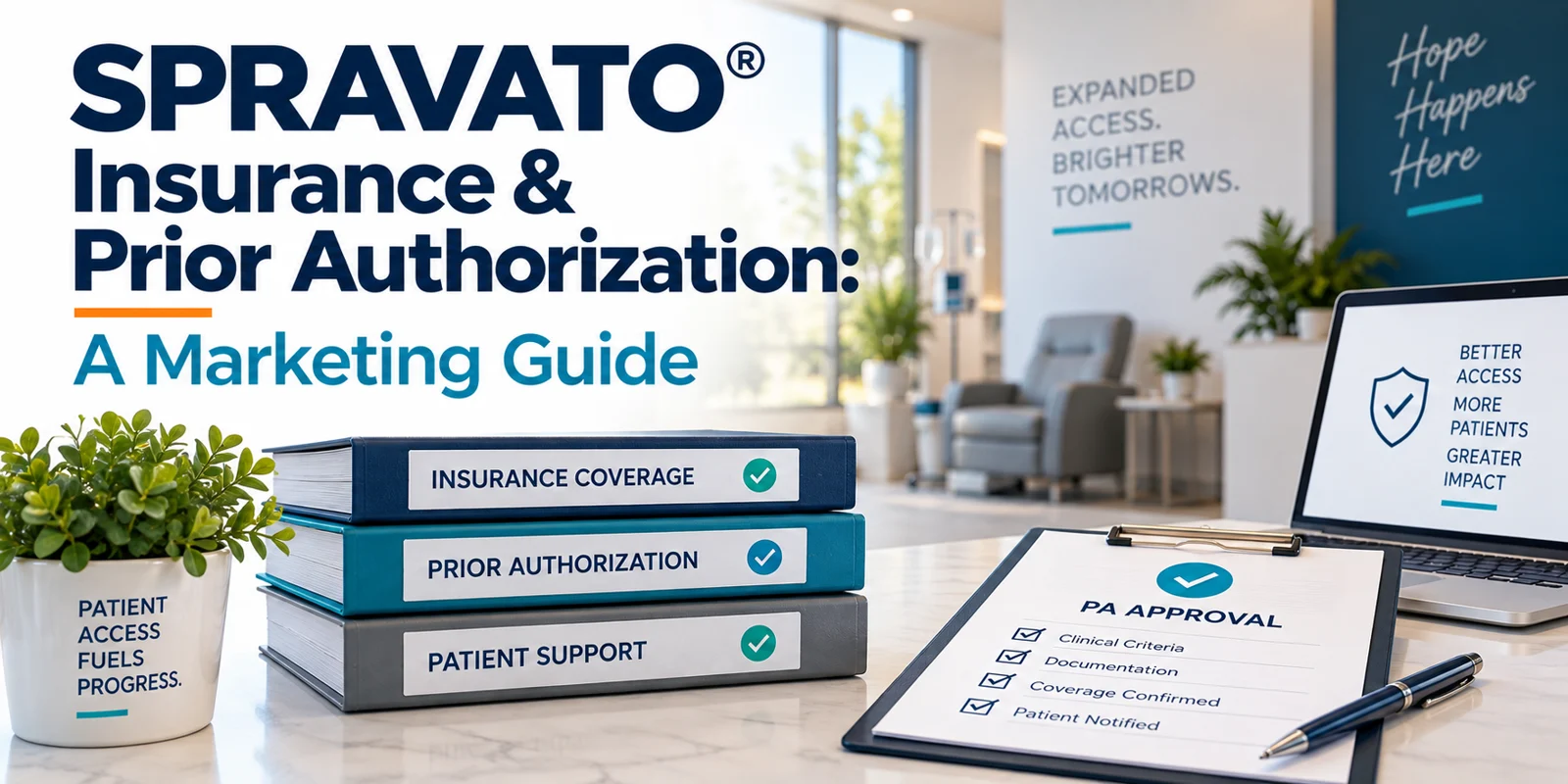
The single most common question a prospective SPRAVATO® patient has, before anything about the treatment itself, is whether they can actually afford it. Getting the answer to that question right — accurate, specific, and honest about the process — is one of the highest-leverage things a clinic’s marketing can do.
The honest answer: broadly covered, but not automatic
SPRAVATO® (esketamine) is FDA-approved for treatment-resistant depression and for major depressive disorder with acute suicidal ideation, and it’s covered by most major commercial insurance plans as well as Medicare Part B — a meaningful advantage over traditional IV ketamine, which is used off-label for depression and is rarely covered by insurance at all. On the medical benefit side, SPRAVATO® is typically billed under specific HCPCS codes (payers have used codes such as J3490, S0013, G2082, and G2083 depending on dose and administration circumstances) rather than a standard pharmacy claim, which is part of why it’s processed differently than a medication picked up at a retail pharmacy — worth knowing before promising patients a familiar, simple copay experience.
But “covered” comes with a process attached. Virtually every payer requires prior authorization before approving SPRAVATO®, and most require documentation that the patient meets the clinical definition of treatment-resistant depression: an inadequate response to at least two antidepressant medications, taken at an adequate dose for an adequate duration, within the current depressive episode. That documentation requirement is the single biggest source of delay and confusion for patients — and the biggest opportunity for a clinic to differentiate on service, not just price.
Authorization timelines vary meaningfully by payer and by how complete the clinical documentation is when it’s submitted — a well-prepared request with clear treatment history moves faster than one missing pieces the payer has to come back and ask for. Because that variability is real and payer-specific, clinics should confirm current timelines and step-therapy requirements against their own actual payer mix before publishing specific numbers to patients.
What documentation actually speeds this up
The clinics that move patients through authorization fastest tend to gather the same core documentation up front, before ever submitting to a payer: a clear medication history showing which antidepressants were tried, at what dose, for how long, and why they were discontinued; a current diagnosis supporting treatment-resistant depression or major depressive disorder with suicidal ideation; and confirmation that the prescribing provider is enrolled in the SPRAVATO® REMS program, since payers may request proof of REMS enrollment alongside the clinical justification. Patients rarely have this information organized on their own — pulling it together is genuinely clinical and administrative work, not something that happens automatically just because a patient wants treatment.
Why this becomes a marketing advantage, not just an obstacle
Most competing clinics either avoid the insurance conversation on their marketing pages entirely, or handle it with a vague “we accept most insurance” line that doesn’t actually answer anything. Both approaches leave a hesitant, financially-anxious prospective patient exactly where they started.
The stronger approach treats insurance navigation as a service feature to market directly, not a logistics detail to bury. That means being specific about what the process actually looks like: a benefits check before the first visit, a clear explanation of what “treatment-resistant” documentation means and how the clinic helps compile it, and an honest, general sense of how long authorization typically takes so patients aren’t left checking their phone every day wondering what’s happening. Clinics that put this information on the page proactively — rather than making a patient call and ask — remove one of the biggest reasons a motivated, insured patient stalls out before ever booking a consultation.
What to avoid
Two things are worth being careful about in any public-facing insurance copy. First, avoid blanket claims like “fully covered by insurance” without qualification — coverage is real and broad, but it’s conditional on prior authorization and documented treatment history, and overstating it sets a patient up for a frustrating surprise (and creates real FTC health-claim exposure for the clinic). Second, avoid naming specific approval timeframes as a guarantee — “authorization typically takes X weeks” should be framed as a general pattern based on the clinic’s own experience, not a promise, since payer processing times aren’t within the clinic’s control.
Medicare Part B and what it means for an older patient population
Because SPRAVATO® is a physician-administered drug rather than one picked up at a pharmacy, it falls under Medicare Part B rather than Part D. That’s a meaningful, underused piece of marketing information for clinics with an older patient base, since many prospective patients — and their adult children helping them research options — assume that because a medication is new and delivered in-office, it must be a cash-pay or experimental treatment. Clearly stating Medicare Part B coverage, alongside commercial plan coverage, closes that assumption gap directly and can open up a segment of the market a clinic’s marketing might otherwise be unintentionally excluding through generic “commercial insurance accepted” language.
When authorization is denied
Prior authorization denials happen, and marketing that only describes the happy path leaves a clinic’s intake team fielding confused, frustrated calls with no messaging to point back to. It’s worth clinics having — and being willing to describe in general terms on their site — a standard appeals process: gathering additional documentation the payer specifically requested, a peer-to-peer review between the prescribing provider and the payer’s medical reviewer where applicable, and a clear internal owner responsible for following an appeal through rather than letting it stall. Patients who hit a denial and see a clinic already has a defined next step tend to stay engaged; patients who hit a denial and are told to “check back” tend to disappear from the funnel entirely.
The bottom line
Insurance clarity is a conversion lever, not just an FAQ item. Patients who understand the real process — what’s covered, what documentation is needed, and roughly what to expect — move through intake with far less friction than patients left to guess. Building that clarity into the marketing itself, accurately and without overpromising, is a core part of how Neurovo approaches SPRAVATO® patient acquisition, and it’s the same insurance-navigation discipline we apply across ketamine and interventional psychiatry marketing generally.
Sources:
- SPRAVATO FDA labeling on treatment-resistant depression clinical criteria and REMS enrollment.
- Payer medical-benefit prior-authorization policy documents referencing SPRAVATO HCPCS billing codes (J3490, G2082, G2083, S0013), reviewed via publicly posted commercial payer drug policy summaries.
- Medicare Part B coverage of physician-administered drugs: Medicare.gov
This article is intended for marketing guidance and is not medical, legal, or insurance advice. Specific coverage and authorization details vary by payer, plan, and state, and should be confirmed against current payer policy before publishing patient-facing claims.